The conversion of Naoki Yamamoto reminds one of Said Nursi’s observation that “Islamic morality must be manifested through actions.” Truth becomes influential when it is made visible through deeds.
SERIES: WHY I BECAME A MUSLIM – 1
Author: Prof. Dr. İbrahim ÖZDEMİR
The Remarkable Story of Naoki Yamamoto
At a time when deism and atheism are debated within Muslim societies, when even those born into Muslim families are bewildered by the meaning of life and sometimes lose their faith, people from every corner of the world—different countries, religions, and cultures—continue to find the meaning of life in the principles of Islam, in the moral teachings of the Qur’an, and in its metaphysical outlook.
The story told by Naoki Yamamoto himself is a meaningful example of this.
It deserves reflection.
A Quiet and Gradual Conversion
Naoki Yamamoto, born in Japan and educated at a university in Kyoto, is a thinker and writer who first encountered Islam through academic curiosity.
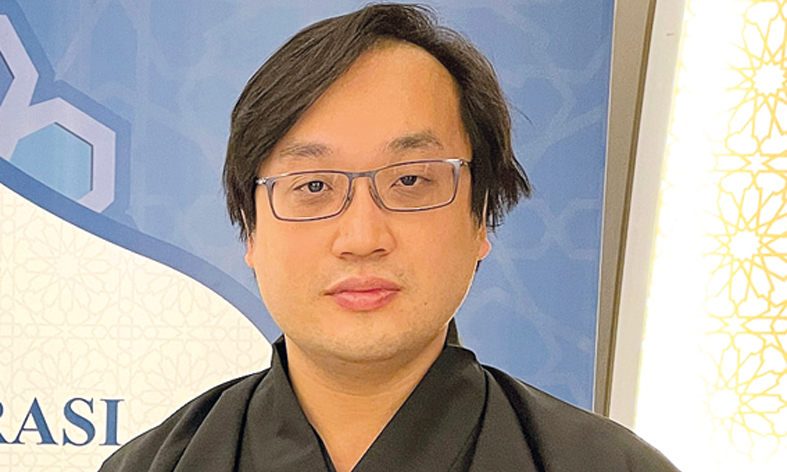
What makes his conversion remarkable is that it was neither a sudden emotional rupture nor a romanticized “miracle story” of conversion. On the contrary, Yamamoto’s becoming Muslim was the result of a quiet, gradual, and profound encounter.
Books, teachers, travels—and most importantly the subtle moral qualities he observed in everyday life—played a decisive role in his approach to Islam.
Discovering Islam as a “Discipline of Meaning”
Yamamoto’s story also contains a powerful critique of how the relationship with religion has been reduced to superficiality in the modern age.
Today religion is often discussed at the level of identity, belonging, or cultural heritage. Yamamoto, however, discovered Islam as a discipline of meaning. His first encounter with the idea of tawhid (divine unity) confronted him not merely with a statement of belief, but with an existential coherence.
For him, Islam first appeared not as a claim or ideology, but as a balance, a simplicity, and a moral orientation.
In this respect, Yamamoto’s story also reveals a paradox frequently observed in Muslim societies: in an age when even those born into Muslim families sometimes lose the sense of meaning, outsiders can still find that meaning alive, authentic, and transformative.
This suggests that the problem lies not in Islam itself, but in how it is lived, transmitted, and represented.
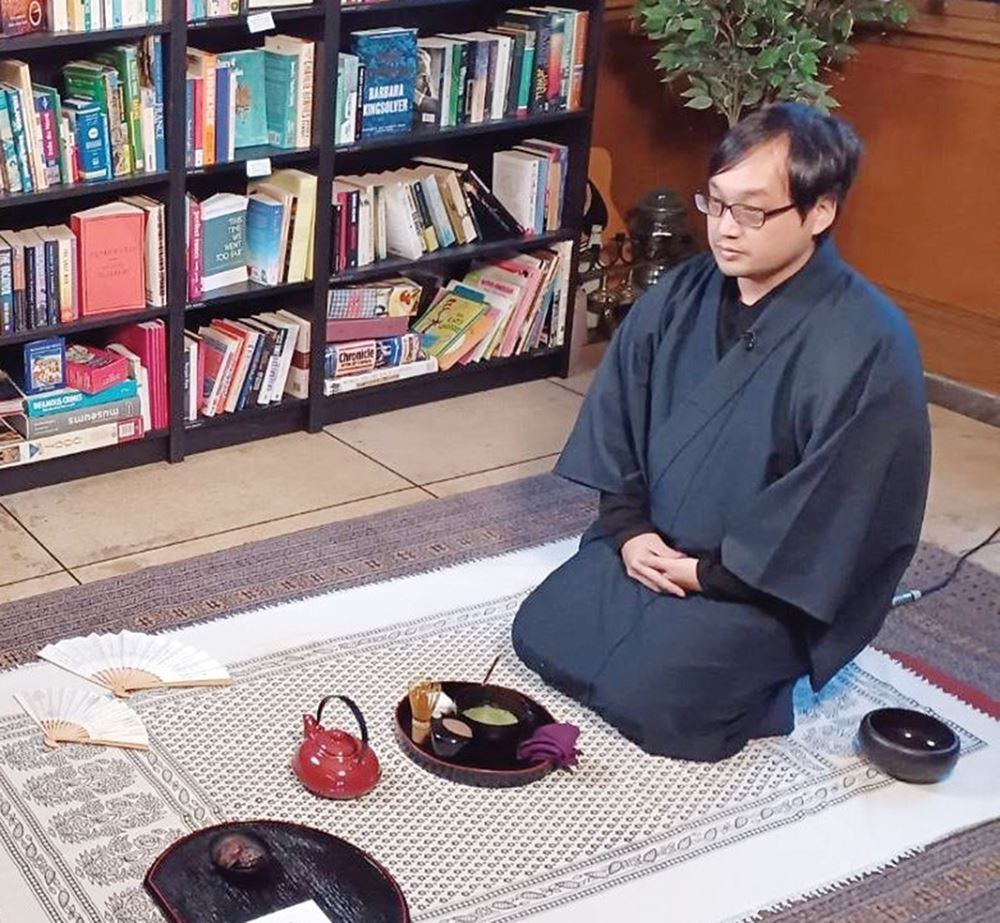
Islam Is Understood Through Representation
The following words expressed by Said Nursi in his famous sermon delivered in 1911 at the Umayyad Mosque remain strikingly relevant even after more than a century:
“If we were to demonstrate the perfection of Islamic morality and the truths of faith through our actions, the followers of other religions would surely enter Islam in groups.”
This statement does not attribute the spread of Islam to strategies of preaching, polemics, or rhetorical superiority. According to Nursi, what is decisive is lived morality and the truths of faith reflected in life.
Islam becomes understandable and attractive not by defending itself, but by being represented.
In an age when everything has become materialized and eyes have grown blind to metaphysical truths, truth gains a transformative and inviting power only when it becomes visible through deeds.
From this perspective, Naoki Yamamoto’s account of his own conversion appears almost as a contemporary and concrete illustration of Nursi’s observation.
Yamamoto did not become Muslim at the end of a sermon, nor as the result of a purely theoretical process of persuasion. What brought him closer to Islam were people before books, states of character before words, and quiet actions before grand claims.
The Manifestation of the Truths of Faith
Another striking element in Yamamoto’s narrative is this: his first encounter with Islam was not a loud call to faith, but the moral clarity of a teacher (sensei) whose measured speech, dignified demeanor, and ability to share his pain openly left a deep impression.
Later came another moment—in Egypt, at the time of iftar—when a poor doorman shared the only cucumber he had without hesitation.
Such scenes are living examples of what Said Nursi meant by the manifestation of Islamic morality through actions.
Here Islam becomes visible not as a declaration of identity or cultural belonging, but as an ethic of self-restraint for the sake of others.
What affected Yamamoto was not Muslims speaking about Islam, but Islam speaking through them.
This is precisely what Nursi called the truths of faith: faith is not merely a mental affirmation but a form of moral energy—a manifestation in existence. Just as water inside a jug eventually overflows, faith becomes visible through character, behavior, and action.
In this context, Nursi’s statement should not be read as a miracle claim or an ambitious wish, but as a sociological observation centered on morality.
Especially in the modern age, people look less at religious discourse and more at religious consistency. The metaphysics of Islam becomes a universal call only when it takes flesh in justice, compassion, humility, and altruism.
Bediuzzaman Saw the Future in the Manifestation of Islamic Morality
Yamamoto’s story also poses a silent question to Muslim societies:
If Islam today appears in some regions as something repellent, defensive, or merely an ideological identity, should the problem be sought in the truth itself—or in its lack of authentic representation?
The warning made by Said Nursi in his Damascus sermon gains renewed significance here. He did not see the future of Islam in political power, in seizing authority, in imposing Islam upon society, in technological advancement, or in numerical superiority.
Rather, he saw it in the restoration of morality to the center of life—in other words, in a moral and existential transformation grounded in faith.
What matters is the conscious awareness and inner transformation of the individual.
Naoki Yamamoto’s conversion confirms this thesis: the true transformative power of Islam becomes visible when it is lived.
Discovering Islam Through Lived Morality
Naoki Yamamoto’s story deliberately distances itself from loud slogans about Islam, identity politics, and grand narratives.
In his story, the “I” remains in the background. What stands out are the moral qualities of the people he encountered—their quiet sacrifices and their practices of faith that carried no desire for visibility.
Perhaps for this reason his narrative does not attempt to persuade; it simply bears witness.
The story that Yamamoto himself describes as “a record of my becoming Muslim, remaining Muslim, and my desire to die as a Muslim” forms a striking contrast with those who openly express their problems with Islam on social media today, and who explain why they have distanced themselves from Islamic faith and values.
In particular, the statements of figures such as Ahmet Arslan and Yasin Ceylan reveal the crisis of meaning experienced by the modern Muslim intellectual.
The difference here is noteworthy: while Arslan and Ceylan examine their relationship with Islam—and their eventual rupture from it—primarily through textual, historical, and critical distance, Yamamoto discovers Islam through lived morality, quiet representation, and existential fidelity.
One represents an internal rupture struggling under the intellectual burden of religion; the other represents an approach from outside that still finds meaning alive.
This contrast suggests an important conclusion:
The issue is not always Islam itself, but how it is lived, how it is represented, and within what moral climate it is transmitted.
Edited by Erhan Akkaya