A Malaysia-based academic study has revealed that the Qur’an-centered civilizational vision of the Risale-i Nur offers a ground for dialogue not only for Muslims but also for the shared challenges of humanity as a whole.
In its December 2025 issue, the International Journal of Research and Innovation in Social Science (IJRISS) published an article entitled “Said Nursi and the Qur’anic Vision of Coexistence: Rethinking Civilizational Dialogue in an Age of Polarization.” The contemporary world is experiencing a period in which religious, cultural, and ideological polarizations are deepening, and identities are increasingly defined through opposition. In such an atmosphere, the idea of “coexistence” is often reduced to a superficial discourse of tolerance, lacking a genuine moral and intellectual foundation. At precisely this point, the Qur’an-centered civilizational vision articulated by Bediüzzaman Said Nursi in the Risale-i Nur Collection presents a strong and authentic alternative for our age.
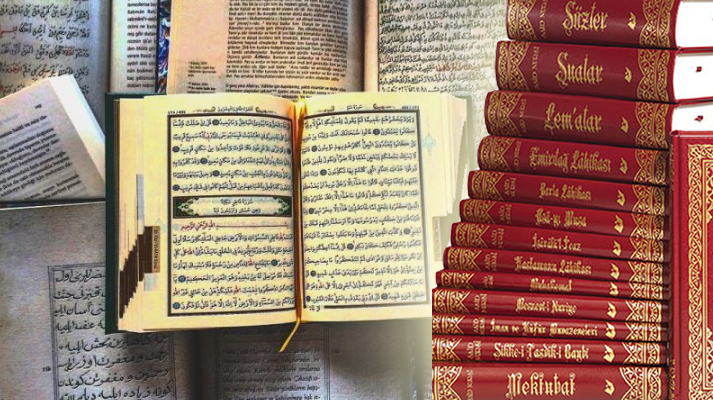
Authored by academics from Universiti Sultan Zainal Abidin (UniSZA) and the University of Malaya and published in 2025, the study examines Said Nursi’s thought within the framework of “inter-civilizational coexistence.” The research demonstrates that the Risale-i Nur is not merely a commentary on faith but also a civilizational text centered on ethics, society, and dialogue.
Tawhid: The Central Principle of Civilization
One of the central emphases of the study is that Said Nursi’s understanding of tawhid (divine unity) is not confined solely to the realm of belief. In the Risale-i Nur, tawhid is positioned at the heart of knowledge, ethics, and social order. Nursi’s concept of ma‘nā-yi harfī enables the universe to be read as a meaningful book pointing to the unity of God. This perspective provides a holistic ground that transcends the commonly encountered modern dichotomies of religion versus science, reason versus revelation, and tradition versus modernity. According to the research, this tawhid-centered approach is not exclusionary toward different beliefs and cultures; rather, it fosters a relationship based on the principle of ta‘āruf (mutual recognition). In this way, faith becomes not a source of conflict, but the foundation of a dialogue grounded in compassion, justice, and wisdom.

Morality and Social Responsibility in the Risale-i Nur
The article also emphasizes that Qur’anic values in the Risale-i Nur are not left as abstract principles but are directly translated into social life. Mercy, justice, and wisdom are transformed into active moral responsibilities in Said Nursi’s thought. The concept of service (hizmet) approaches benefit to humanity with the consciousness of worship. In this respect, the Risale-i Nur calls not for passive tolerance, but for active goodness and justice.
In particular, the dershane model stands out as a concrete example of Nursi’s civilizational vision. These dershanes—communal residences and study houses where the Risale-i Nur is read, and where students and individuals live together—are small yet effective social units in which knowledge is produced through consultation, morality is learned through lived experience, and brotherhood is practiced in daily life. According to the researchers, this structure offers an alternative model for moral and personal development distinct from modern educational paradigms.
Qur’anic Dialogue Against the Clash of Civilizations
Another noteworthy aspect of the study is that Said Nursi’s thought constitutes a clear response to the “clash of civilizations” thesis. Nursi argues that people of faith can cooperate around shared moral values. In his view, the real danger does not lie in different religions but in materialist worldviews that sever humanity from spirituality. This approach provides an important balance against divisive religious discourses frequently employed in today’s world.

What Does It Say for Today?
The conclusion reached by the research is clear: The Risale-i Nur continues to offer a living and valid framework of solutions to the epistemological and moral crises of our time. Said Nursi’s tawhid-centered approach brings together individual faith and social responsibility, spirituality and the realities of the modern world, and fidelity with an openness to truth within a single synthesis. From the perspective of the principles long advocated by Yeni Asya—freedom, justice, consultation, and positive action—this study reaffirms that the Risale-i Nur is not merely a legacy of the past but a civilizational vision that gives meaning to the present and helps shape the future. In an age where polarization deepens and truth becomes obscured amid noise, Nursi’s call remains highly relevant: Faith is not the ground of division, but the firmest foundation for coexistence.
This academic voice rising from Malaysia can be read as a confirmation of Bediüzzaman’s principle, “We are devotees of love; we have no time for hostility.” The study emphasizes that the way out of the spiral of polarization lies in rethinking the Qur’an’s universal principles of justice, mercy, and wisdom through the faith–ethics axis proposed by the Risale-i Nur. Here, dialogue is not conceived as a superficial compromise, but as a process to be constructed upon shared human nature, universal virtues, and a principled language of compassion.

Global Interest in the Risale-i Nur
The fact that the article was published in December 2025 is also noteworthy. It may be regarded as a sign that the contemporary relevance of the Risale-i Nur is becoming increasingly visible not only in social life but also within academic discourse. Especially in regions such as Malaysia, where diverse cultures coexist, addressing the Risale-i Nur perspective under the heading of “civilizational construction” demonstrates that this model is increasingly being seen as a meaningful roadmap not only for Muslims but for the common challenges of humanity. Another aspect that makes this research significant is its ability to render Nursi’s thought visible once again within an intellectual framework by relating it to contemporary social science concepts such as civilizational dialogue, hermeneutics, and ethics. Such a study emerging from a Malaysian university further indicates that the universal message of the Risale-i Nur continues to attract global academic interest.
References:
Mohamad Zaidin Mohamad, Wan Khairul Firdaus Wan Khairaldin, Hanif Md Lateh@Junoh, Noor Safuan Che Noh, Sofyuddin Yusof, & Faizuri Abd Latif (2025). Said Nursi and the Qur’anic Vision of Coexistence: Rethinking Civilizational Dialogue in an Age of Polarization. International Journal of Research and Innovation in Social Science (IJRISS), 9(30), 570–573, December.
Editing: Erhan Akkaya