Saying, “I chose to become Muslim; now the real matter is sustaining it,” Yamamoto draws attention to the fact that faith is preserved not merely by being spoken, but by being lived.
Why Did I Become Muslim? – 2
Author: Prof. Dr. İbrahim ÖZDEMİR
The Instructive Story of Naoki Yamamoto
NOT AN EMPTY IDENTITY, BUT A TRUST TO BE CARRIED
Yamamoto’s story shows that not loud criticisms but a quiet yet consistent life can still be inviting. For this very reason, this encounter deserves a moment of reflection.
In the context of the moral decline, the assimilation into Western lifestyles, and the ethical dissolution observed among segments of youth today labeled as “Islamist,” Yamamoto’s story offers an extremely instructive opportunity for comparison.
Yamamoto does not establish his relationship with Islam through identity, slogans, or ideological belonging, but through morality, simplicity, and responsibility. What draws him toward Islam is not promises of “freedom,” “pleasure,” or “success,” but a cucumber shared in poverty, the honesty of a teacher who did not hide his pain, and a form of faith that does not seek visibility. In his life, Islam is not an identity to be consumed, but a trust to be carried.
In contrast, the corruption and decay observed among some youth circles that define themselves as “Islamist” often operate in the exact opposite way. While the pleasure-centered, individualistic, and consumption-oriented lifestyle of the West is criticized in appearance, in practice the same values are reproduced in another language. Luxury, display, status, power, and sexual permissiveness are legitimized under headings such as “self-confidence,” “success,” or “modernity.” Thus Islam is reduced from a moral discipline to a cultural label.
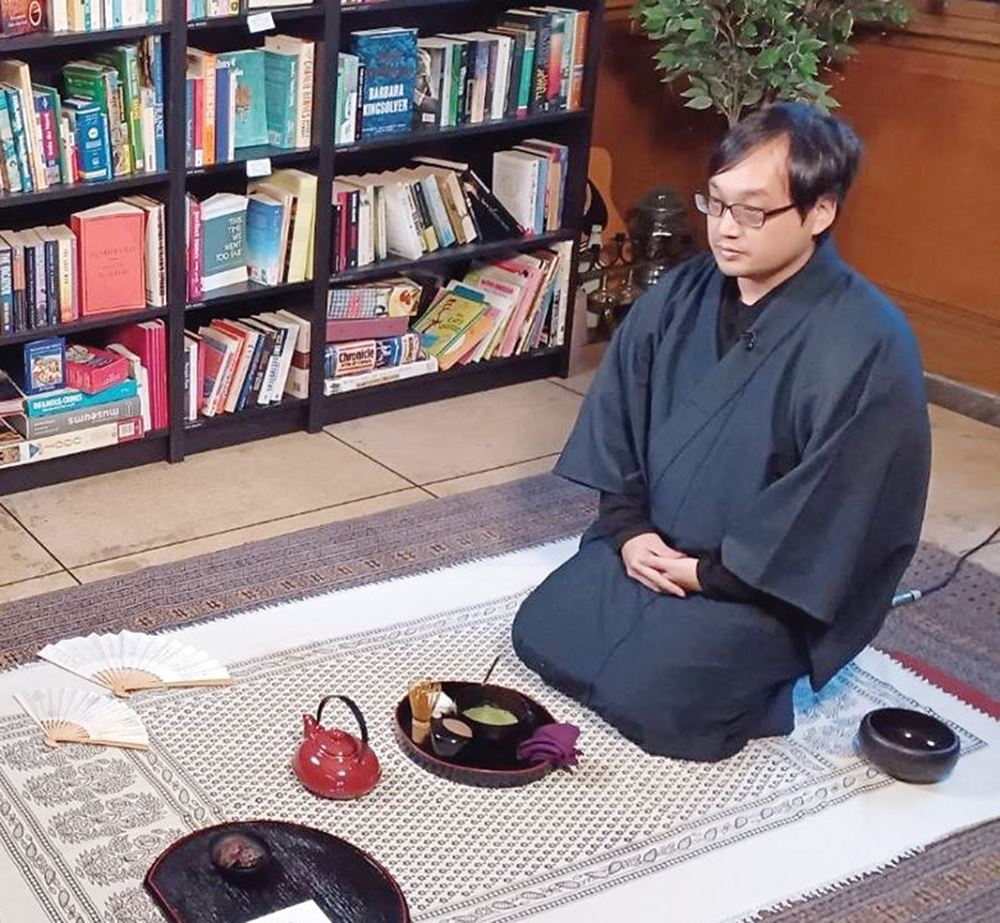
CARRYING RESPONSIBILITY OR ESCAPING FROM IT?
At this point Yamamoto’s story holds up a quiet but striking mirror:
While someone who discovers Islam from the outside is willing to carry its burden with seriousness, some young people who come from within seek ways to escape that burden.
The issue is not living in the West or having contact with the modern world; rather, it is internalizing the West’s hierarchy of values without questioning it and then legitimizing it.
For this reason Yamamoto’s story poses an implicit question to Muslims:
“Is Islam for you a morality, or merely an identity? A responsibility, or a comfort zone?”
Ultimately, Yamamoto’s story reminds us of this: Islam gains meaning when it is lived most personally and when it colors one’s life. When moral loyalty weakens, an internal decay becomes inevitable, no matter how strong the ideological discourse may appear.
THIS EXPERIENCE INVITES REFLECTION
Recognizing this difference appears more vital today than ever.
For this very reason, the experience that Yamamoto recounts in his own words is practically an invitation to serious reflection today for both Muslims and those who observe Islam from afar.
* What is faith?
* Where does meaning disappear?
* Which quiet actions can be more powerful than the most profound theological texts?
These questions reappear before us, together with his story, on a more sincere and authentic ground. Let us listen to Naoki Yamamoto’s story.
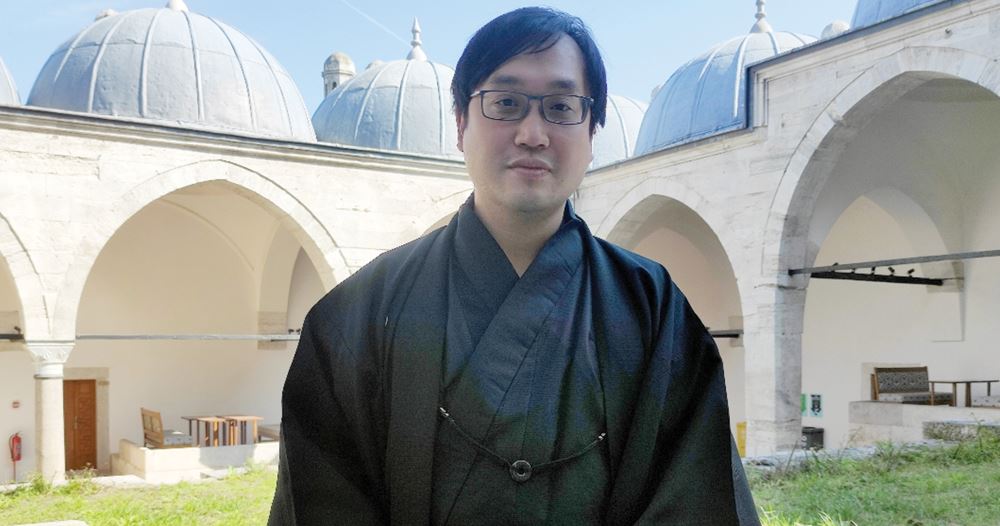
WHY DID I BECOME MUSLIM?
“One of the questions that those who embrace Islam become most weary of is this: ‘Why did you become Muslim?’ I have been asked this question countless times—no fewer than a thousand. Today on YouTube and TikTok it is possible to encounter countless conversion stories packaged with narratives of discovery, rupture, and ultimate resolution.
Yet most of these stories have very little to do with Islam’s own traditional modes of transmission. In fact, it is difficult to find even a single example in pre-modern Muslim societies where a book titled ‘Why I Became Muslim’ held any special interest or cultural value. Such a genre never existed as a meaningful form of religious expression.
Of course, there are hagiographic narratives describing how an entire community embraced Islam through the influence of a great scholar or after his passing. But even in those accounts, conversion is not treated as an individual autobiography or a psychological ‘journey of the self.’ Rather, it appears as a secondary result of moral authority, knowledge, or social transformation. The story never revolves around the question ‘Why did I choose Islam?’; it points instead to a truth that transcends the individual.
Modern conversion narratives are different. They are shaped by the West’s autobiographical culture and identity politics, and they often function as ‘safe,’ consumable content within non-Muslim societies.
I am aware of this.
THE JOURNEY TOWARD ISLAM
Even so, despite my reservations, I believe there is still value in sharing my own story. I share it not as a model or justification, but simply as a memory: a record of my becoming Muslim, remaining Muslim, and my desire to die as a Muslim.
People often ask:
What was your journey to Islam like?
My answer is simple—perhaps unexpectedly so:
My encounter with Islam was an encounter with a teacher—with a sensei.
THE FIRST ENCOUNTER WITH THE IDEA OF TAWḤĪD
Eighteen years ago, before becoming Muslim, I was an undergraduate student at a university in Kyoto. As part of my coursework, I was reading introductory texts about various religious traditions. One day, while browsing the university library, I came across a small book titled A Brief Introduction to God. Without mentioning Allah or the Prophet Muhammad (peace be upon him), the book explained the Islamic concept of tawḥīd—the oneness of God. The clarity and balance of the presentation deeply impressed me. Curious about the author, I learned that the book had been written by the wife of a Japanese Muslim professor at my university. I gathered my courage and wrote to the professor, asking whether I could meet his wife.
He replied immediately and suggested we meet at a café near the university. But when he arrived, something unexpected happened. The moment he entered, he burst into tears. With great sorrow he told me that his wife had passed away a year earlier after a long illness.
A FORM OF FAITH THAT DOES NOT FALL INTO DESPAIR
He spoke of his grief, his loss, and the deep emptiness her absence had left in his life. Then he paused and said that seeing me there—a young man who had read his late wife’s book and come searching for her—reminded him of a prophetic hadith:
“When a person dies, his deeds come to an end except for three: ongoing charity, beneficial knowledge, and a righteous child who prays for him.”
Looking at me he said:
“I missed her terribly. I kept thinking about where she had gone and how I could ever see her again. But now her life has become knowledge. She lives in your heart, and through you she lives with me as well. Instead of her, I will be your sensei.”
At that moment I knew almost nothing about Islam. I was not even sure whether I could trust this man. But his honesty deeply moved me. His ability to open his heart to a student he had just met, to speak of love, loss, and hope without reservation—this was made possible by a form of faith.
UNITY WITHIN MULTIPLICITY
Over time my sensei introduced me to Muslims from Malaysia, Indonesia, England, Syria, and Egypt. Through them I learned something remarkable: tawḥīd is one, but its manifestations are many. Until then I had unconsciously imagined Muslims as belonging only to the Middle East. The linguistic, cultural, and historical diversity coexisting within Islamic civilization astonished me.
The following summer I traveled with my sensei to Cairo for an intensive Arabic program.
That year I experienced the blessed month of Ramadan in Egypt for the first time.
We were staying in a modest apartment with an elderly doorman sitting at the entrance. One evening at iftar I saw him break his fast with nothing but a cucumber.
It was an extremely simple—almost ascetic—meal. When he saw me standing there, he immediately offered the cucumber to me and wanted to share it. I was not Muslim. In that society I was merely a guest. Yet that quiet gesture shook me deeply. In that moment I realized that Islam was not merely a belief held in the heart. Even in poverty it still carried a silent force that guided people toward generosity without seeking recognition.
That doorman most likely does not even remember giving a cucumber to a Japanese student standing at the door. Nor would he have considered it a story worth telling. The idea of recording a video titled “Why I Gave a Cucumber to a Stranger as a Muslim” and uploading it to YouTube would never have crossed his mind.
Perhaps that is exactly what faith is.
It does not seek recognition, narration, or explanation.
It quietly becomes action and then disappears, leaving behind not a story about the self but a trace in someone else’s life.
“I WANT TO REMAIN MUSLIM”
A short while later in Cairo, one day my teacher casually turned to me and said:
“Why not take this opportunity and become Muslim?”
Looking back today, I believe the seed of faith had already begun to grow in my heart long before that question was asked.
Still, I was hesitant.
I asked a question that seemed sincere at the time but now sounds somewhat naïve:
“If I become Muslim, will I be happy?”
His answer surprised me.
“You will not become happy by entering Islam,” he said.
“On the contrary, your life will become harder. You will suffer. You will make mistakes. I too have made many mistakes; regret and repentance have been my closest companions. But I live as a Muslim because I want to see my wife again in the hereafter. I want to die as a Muslim. Even if you become a flawed, weak, sinful Muslim like me, that will be enough. Then God will guide us toward what He wants us to become.”
That day I proclaimed my faith by reciting the shahada.
Quietly, without ceremony or drama, I became Muslim.
My sensei was right. After becoming Muslim life did not become easier. It became more difficult. Part of that difficulty came from the harshness of the world we live in, and part from the harshness of confronting myself. Since that day I have stopped counting how many times I have disappointed myself.
I no longer know where this path will lead me. I do not know what I will become or what will be asked of me along the way.
But one thing I know with certainty:
I am Muslim, and I want to remain Muslim.
FAITH IS PRESERVED WHEN IT IS LIVED
For individuals born into Muslim families and societies, the most fundamental lesson to be drawn from Naoki Yamamoto’s story is that belonging is not automatic; it is a conscious loyalty.
His narrative reminds us once again that being Muslim is not merely an inherited identity but a moral and existential decision renewed every day.
For this reason the real question is not simply “Alhamdulillah, am I Muslim?” but rather “Alhamdulillah, I am Muslim—do I truly want to remain Muslim?”
For faith is preserved only when it is lived; when it becomes mere habit, it quietly erodes.
The devotion with which Yamamoto carries this commitment from the outside serves as a powerful warning and a sincere invitation for those who come from within.
NOT A COMFORTABLE BELONGING, BUT A STATE OF VIGILANCE
This is not a comfortable belonging but a state of conscious vigilance. The second part of the verse elevates this awareness to its highest level:
“And do not die except as Muslims.”
Here death is presented not as a threat or annihilation but as the final test of faith.
A person often dies as he lives.
From this perspective, Yamamoto’s emphasis on “remaining Muslim and dying as a Muslim” appears almost like a contemporary reflection on the verse.
THE QUESTION THAT MUST BE ASKED EVERY DAY
Yamamoto expresses this desire not because he inherited Islam, but because he consciously chose it and accepted its cost.
The verse addresses those born into Muslim societies with a profound question:
“Is our faith a direction that will carry us to the end, or a fragile identity sustained merely by habit?”
The Qur’an’s answer is clear:
Faith is not a condition completed by saying “Alhamdulillah, I am Muslim.” It is a journey that requires asking every day, “Do I truly wish to remain Muslim?”
For this reason this blessed verse is both a warning and a call to hope—and Yamamoto is aware of this.
Naoki Yamamoto: REMAINING MUSLIM IS THE REAL RESPONSIBILITY
Verse 102 of Surah Āl-‘Imrān reminds us in precisely this context that faith is not an inherited label but a lifelong loyalty requiring continuity:
“O you who believe! Fear Allah as He should be feared and do not die except as Muslims.”
This verse treats faith not as an identity declaration made in the past but as a direction that must be preserved throughout life.
The address “O you who believe” is particularly meaningful, because the audience is already Muslim. Yet the verse warns them again and again.
This shows that the matter does not end with becoming Muslim; remaining Muslim is the real responsibility.
To show due reverence to Allah (taqwa) does not merely mean avoiding the forbidden. It means keeping faith at the center of life, living with awareness of God, and keeping that awareness alive in morality, intention, and action.
Thank you, Dr. Naoki Yamamoto!
Thank you for sincerely sharing your story and inviting us to reflection.
And besides, who will become whose sensei is never certain.
— THE END —