Discussing Bediüzzaman Said Nursi's understanding of constitutionalism, Prof. Dr. Şevki Adem said that democracy is not merely about elections and the ballot box, but can thrive only through the rule of law, consultation, freedom of thought, and responsible citizenship.
Prof. Dr. Şevki Adem: “Limiting the State: The True Test of Democracy”*
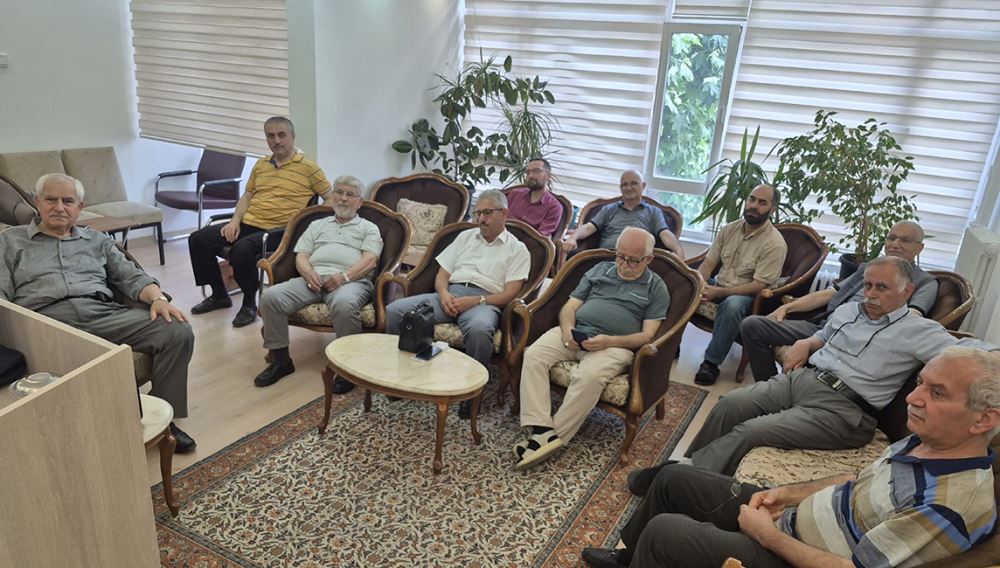
The guest speaker of this week’s biweekly academic seminar series on *“State and Democracy,”* organized by the Ankara Branch of the Yeni Asya Foundation Risale-i Nur Institute, was *Prof. Dr. Şevki Adem, who delivered a lecture entitled *“Limiting the State: The True Test of Democracy.”**
Opening his presentation with the statement, *“The state restrains chaos; democracy restrains the state,”* Prof. Dr. Şevki Adem discussed Bediüzzaman Said Nursi’s understanding of constitutionalism, liberty, the rule of law, and citizenship. He emphasized that democracy is not merely about elections and ballot boxes; rather, its true value lies in its ability to limit political power through the rule of law, parliament, public opinion, and a well-informed and responsible citizenry.
### The Rule of Law Is the Remedy for Despotism
Prof. Adem first addressed why the state is indispensable for human society. He explained that the state plays an essential role in ensuring security, justice, public order, the protection of property, education, healthcare, and national defense. However, he stressed that the necessity of the state does not imply unlimited state power.
He noted that the state is ultimately composed of human beings, and that human tendencies toward domination, leadership, self-interest, partisanship, and disregard for rules can give rise to despotism when combined with state authority. Referring to Bediüzzaman’s view that the roots of despotism are found not only in political systems but also in the pursuit of status, personal influence, favoritism, and domination, Prof. Adem stated:
> “Democracy is not merely a method of choosing rulers; it is also a system for limiting their power. If democracy is reduced solely to elections, those who come to power may begin to regard themselves as possessing unlimited authority. Therefore, the fundamental question of democracy is not ‘Who will govern?’ but ‘How will the power of those who govern be limited?’ The true value of democracy lies not in bringing us to power, but in subjecting us to the rule of law once we are in power.”
### “In Law, the Sultan and the Beggar Are Equal”
Prof. Adem identified the rule of law as the first mechanism for limiting the state. Recalling Bediüzzaman’s words, *“Equality is not in virtue or honor, but in law. Before the law, the sultan and the beggar are equal,”* he argued that a constitutional state cannot be reduced to written legislation alone. The real question, he said, is whether the law can effectively protect citizens against the power of the state.
According to Prof. Adem, a genuine legal order derives its legitimacy from protecting the weak against the strong, ordinary citizens against those in authority, and minorities against majorities. He remarked:
> “The real test of democracy is not granting rights to those we favor, but safeguarding the rights of those who are different from us.”
He illustrated this principle through historical examples, including the legal dispute between Caliph Ali and a Jewish citizen, and Sultan Saladin’s appearance before a court in a case involving a Christian, demonstrating that justice means protecting not only one's own side but also the rights of others.

### When Free Thought Is Silenced, Mistakes Multiply
Prof. Adem identified parliament, consultation (shura), and freedom of thought as the second major limitation on state power. He explained that Bediüzzaman regarded parliament as *“the heart of the nation,”* consultation as *“the nation’s collective wisdom,”* and free thought as *“the strength of civilization.”*
He argued that the modern state has become too complex to be governed by the judgment of a single individual or a narrow elite. Issues such as the economy, law, education, foreign policy, urban planning, and security require collective reasoning and shared decision-making.
Accordingly, parliament is not merely a legislative institution but the place where the nation’s will, criticism, oversight, and collective wisdom are represented. He warned that when free voices are silenced, governments become incapable of recognizing their own mistakes, and when consultation weakens, collective wisdom disappears.
> “Where a single mind silences all others, mistakes grow. Where free ideas are allowed to speak, the state learns its limits.”
### The Press Must Be the Voice of Truth
Prof. Adem also described the press and public opinion as essential democratic mechanisms for limiting state power. He explained that Bediüzzaman viewed newspapers not simply as channels of information but, when used properly, as the voice of public conscience and the eyes and ears of society. At the same time, he warned that the press must also be evaluated in light of the dangers it may pose.
> “The press can become either the voice of truth or an instrument of prejudice, partisanship, slander, and social discord.”
Recalling Bediüzzaman’s statement that *“prejudiced newspapers silenced the voice of true freedom,”* he emphasized that press freedom is indispensable to democracy, but must remain bound by truth, ethics, and responsibility toward the public good.
> “When the press speaks for truth, it protects democracy; when it becomes the noise of prejudice, it suffocates freedom.”
### Democracy Cannot Function Without Responsible Citizens
One of the most striking parts of the seminar focused on the role of citizens. Prof. Adem argued that institutions such as law, parliament, and the press can function properly only when supported by an alert and responsible citizenry.
He noted that Bediüzzaman regarded constitutional government as a delicate achievement that cannot survive where ignorance, hostility, blind obedience, partisanship, and feudal attitudes prevail. Referring to Bediüzzaman’s vivid description of constitutionalism as something that fears “the bears of savagery, the dragon of ignorance, and the wolves of hostility,” he stressed that democracy requires not only institutions but also a supportive social culture.
### The Spirit of Democracy Is Knowledge and Virtue
Prof. Adem gave special attention to Bediüzzaman’s statement:
> “Build the railway with knowledge and virtue.”
He explained that this expression signifies that democracy cannot survive merely through elections, laws, and institutions. Rather, it flourishes through the knowledge, moral character, civic responsibility, and virtue of the people.
As long as ignorance, hostility, blind obedience, and partisanship continue, democracy may exist in name but not in spirit.
> “The road to democracy passes through the ballot box, but its spirit lives through knowledge and virtue.”
He added that the first duty of citizens is to remain vigilant. Quoting Bediüzzaman’s observation that even a small number of awakened people were sufficient to overcome despotism, he argued that democracy’s greatest weakness often lies not in the strength of its enemies but in the negligence of its supporters.
> “Democracy is not the regime of sleeping crowds, but of awakened nations.”
### Defending Democracy Is a Civic Duty
Describing democracy as more than merely voting, Prof. Adem emphasized that citizens must also monitor government, ask questions, object when necessary, and protect the public trust.
Referring to Bediüzzaman’s analogy of the shepherd and the flock, he explained that if everyone leaves responsibility solely to the shepherd, wolves will inevitably attack. But if everyone stands watch like a guardian, dangers can be prevented.
### Freedom Weakens When Its Friends Remain Silent
Prof. Adem further referred to Bediüzzaman’s observation that freedom is weakened not only by its enemies but also by the silence of its friends.
He stressed that freedom does not mean lawlessness or violating the rights of others, but rather protecting human dignity within the framework of law and morality. Recalling Bediüzzaman’s warning,
> “Do not misinterpret freedom, lest it slip from our hands,”
he argued that misunderstanding liberty may eventually bring back oppression under a different name.
### Democracy Requires Critical Judgment, Not Blind Obedience
Prof. Adem concluded by emphasizing that democratic citizenship requires independent judgment rather than blind loyalty. During times of crisis, societies often seek saviors, strong leaders, military guardians, or ideological authorities. However, he remarked:
> “A society that constantly seeks a guardian cannot earn the certificate of freedom.”
Drawing upon Bediüzzaman’s advice to “test everything on the touchstone,” he argued that citizens should evaluate every claim, every piece of propaganda, and every political promise through evidence, consequences, and reason.
He concluded by noting that Bediüzzaman strongly opposed domination, authoritarianism, and feudal attitudes, arguing that democracy is not merely a constitutional arrangement but also a moral and cultural achievement.
Prof. Adem ended his seminar with the following words:
> “The certificate of freedom does not emerge from the ballot box alone; it requires the support of knowledge, virtue, consultation, free thought, and a consciousness of the rule of law.”