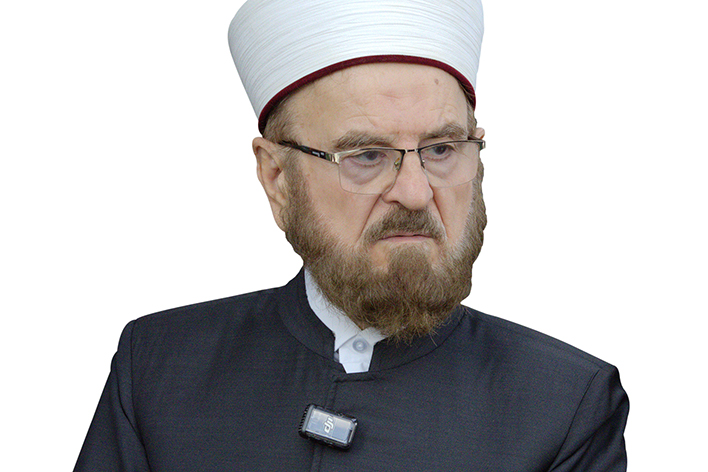
Ali Muhyiddin al-Qaradaghi, President of the International Union of Muslim Scholars, emphasised that faith must be reflected in morality, stating: “Said Nursi was right to regard the establishment of Islamic unity as one of the most important duties of Muslims. The success of the ummah depends on unity, while its failure is linked to division and discord.”
INTERVIEW – IBRAHIM ERSOYLU
[email protected]
Photos: Muhammed Okur – Yeni Asya
INTRODUCTION
Last year, we interviewed Ali Muhyiddin al-Qaradaghi, President of the International Union of Muslim Scholars, at the Gaza Conference held on Yassıada Island in Istanbul, focusing on Palestine, Gaza and the Islamic world. This time, following the Bediuzzaman Symposium held in Istanbul in early October, we spoke to him on behalf of our newspaper and Yeni Asya TV about finding Qur’anic solutions to global crises through the perspective of Bediuzzaman and the Risale-i Nur. Here is our interview.
Could you briefly inform our readers about the activities and work of the International Union of Muslim Scholars?
In the name of Allah, the Most Gracious, the Most Merciful.
One of the Union’s most important objectives is the revival and advancement of the Islamic ummah. As stated in the Qur’an, Muslims should be the best community brought forth for humankind: they should enjoin what is good and forbid what is wrong. Being a good community is not limited to any particular field; it encompasses every aspect of life, including faith, belief, deeds, religious rulings and relations with other people.
For the ummah to attain this quality, young people, the elderly, children, men and women must all shoulder this responsibility. For this reason, our Union attaches particular importance to belief and faith. Belief is the foundation, and iman (faith) forms the basis of a person’s relationship with Allah.
YOUNG PEOPLE ARE IMPORTANT
One of the issues on which Bediuzzaman Said Nursi focused throughout his life was strengthening faith in people’s hearts, particularly those of young people. True iman means establishing a bond with Allah. Faith is not merely a wish, an outward appearance or an intellectual acceptance; it must be reflected in behaviour, deeds and morality. The Qur’an states that those who believe and perform righteous deeds will attain salvation. Therefore, faith must be complemented by good conduct and must guide the way people live.
In my view, faith carries a light and radiance within it. This light is reflected from a believer’s heart into their limbs and, consequently, their behaviour. A person’s actions are shaped by this light. This is also the understanding emphasised by Said Nursi. Our Union strives to strengthen faith, particularly among young people.
FAITH AND BEHAVIOUR
Do you undertake any activities to counter irreligious movements such as atheism, which denies the existence of Almighty Allah, and deism, which rejects revealed religions and the Prophets?
We are currently conducting an extensive study aimed at analysing the system of thought underpinning atheism. This is because atheism is not merely a matter of denying Allah; it is a system of thought and influence with psychological, social and political dimensions. Approaches that seek to erase Islamic identity and wage a struggle against Islam and faith can also emerge within this framework.
For this reason, we seek to instil a sound understanding of faith in the hearts of young people. Strengthening iman should also lead to improvements in morality, work and behaviour. The Qur’an establishes a connection between acts of worship and conduct. It states that prayer restrains people from indecency and wrongdoing. Fasting has been prescribed so that people may attain taqwa (God-consciousness). In the verse concerning sacrifice, it is likewise stated that neither the flesh nor the blood reaches Allah; rather, it is taqwa that reaches Him. Prayer, fasting, zakat (obligatory almsgiving) and Hajj (pilgrimage), together with the declaration of faith, constitute the Five Pillars of Islam and are directly connected with a person’s morality and behaviour.
In his work The Gleams (Lem’alar), Bediuzzaman Said Nursi speaks of the need for Muslims to temporarily set aside their differences with genuinely devout Christian clergy and unite with them in combating their common enemy: irreligion. What are your thoughts on this matter?
According to Said Nursi’s approach, Muslims can work together with devout Christians on common issues, such as combating atheism. The Qur’an encourages people to establish relationships on the basis of shared principles. Some of these commonalities stem from human values, while others arise from the shared teachings of different religions. The Qur’an calls upon the People of the Book: “Come to a common word between us and you: that we worship none but Allah.”
Said Nursi’s approach represents the practical application of these Qur’anic principles. When there is a shared responsibility concerning a particular issue, people from different religious backgrounds can work together on that matter.
At a meeting linked to the United Nations, issues such as eliminating differences between women and men and accepting homosexuality were raised. I was present at the meeting as one of the Muslim scholars, alongside scholars from Christianity and other religious traditions. At this meeting in Cairo, the scholars who gathered opposed these proposals, and the project was not approved. However, we later learned that the same project had been approved at another meeting held in China. I should point out that we were not given the opportunity to attend that meeting and were not invited.
THE UMMAH’S SUCCESS LIES IN ACTING TOGETHER
In one of his works, Bediuzzaman Said Nursi states that the greatest obligatory duty of Muslims in our time is Ittihad-i Islam (Islamic unity). What would you say about this?
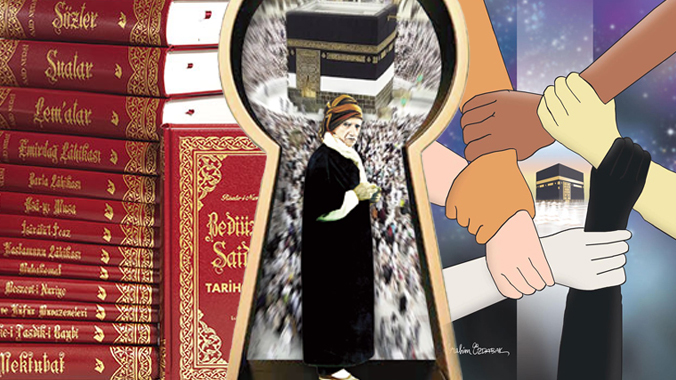
Said Nursi was right to regard the establishment of Islamic unity as one of the most important duties of Muslims. The success of the ummah depends on unity, while its failure is linked to division and discord. The Qur’an commands obedience to Allah and His Messenger and instructs Muslims to refer their disputes back to Allah and His Messenger when disagreements arise. It also warns that disputes will cause Muslims to lose heart and their strength to disappear.
A successful ummah is one that acts in unity; a community that is fragmented and constantly embroiled in disputes loses its strength. Hadiths transmitted in connection with the Farewell Sermon also contain serious warnings against Muslims fighting one another to the point of shedding each other’s blood.
SAID NURSI GAVE PRIORITY TO THE PRESERVATION OF FAITH
In your opinion, what distinguishes Said Nursi from other scholars?
The period in which Said Nursi lived was an extremely difficult one, during which Islam and faith faced opposition in many areas of life. He correctly assessed the conflicts of his time and the challenges confronting Muslims, giving priority to preserving and strengthening faith.
During the earlier part of his life, Nursi’s political activities, his struggle and his contacts with the rulers of the time were prominent. It is also reported that he attempted to meet Sultan Abdulhamid II. However, following the abolition of the Caliphate, he entered a new period in which he believed that pressure on Islam, faith and morality had intensified. Developments mentioned in this context include the prohibition of the call to prayer, the closure of mosques and religious schools, restrictions on religious education and the change of the alphabet.
The transition from the Arabic script to the Latin alphabet is viewed as having weakened the connection between new generations and the cultural and written heritage of the past. From this perspective, the alphabet reform was not merely a matter of changing a writing system; it also affected the relationship between successive generations, history and Islamic culture.
THE DAMASCUS SERMON REMAINS RELEVANT TODAY
What are your thoughts on Said Nursi’s Damascus Sermon and the ailments of society?
The famous sermon delivered by Said Nursi in Damascus in 1911 remains relevant today. Damascus has historically been an important centre and held a special place within the geographical realm of the Caliphate during the Ottoman period. The prayers of the Prophet Muhammad (peace be upon him) for the people of Damascus also remind us of the region’s importance. Furthermore, throughout history, many struggles between great powers have taken place in the Middle East. Nursi addressed Turkish and Arab societies in this sermon.
In the sermon, he speaks of six ailments afflicting the ummah. In our discussion, particular emphasis is placed on despair, the abandonment of truthfulness in social life and hostility among Muslims. The remedy for despair is a strong sense of hope in Islam and the future. Truthfulness is the remedy for social dishonesty, while devotion for the sake of Allah and brotherhood are the remedies for hostility among Muslims. Nursi set out fundamental steps for the recovery of the ummah. Ultimately, this sermon remains very much alive and relevant today.
WE MUST KNOW ISLAMIC HISTORY WELL
What message would you like to convey to Yeni Asya’s readers?
My advice to all your readers and viewers is to study Islamic history, as well as the histories of Turkish, Kurdish and Arab societies, carefully. They should examine the values through which these societies gained strength. They should remember that the Ottoman Empire ruled over vast territories and built a powerful civilisation, and they should study this history thoroughly.
According to a statement by Said Nursi on this subject, the Islamic ummah rose, progressed and built a powerful civilisation when it remained committed to Islam; when it moved away from Islam, it declined. My message to young people is this: they should recognise that Islam brings goodness to religion, worldly life, the sciences and civilisation. They should understand that goodness is to be found in Islam.
Thank you for sharing your views with us.
I thank you as well and wish you every success in your service.
Yeni Asya English