Responding to questions from Yeni Asya, British journalist, author, and activist Lauren Booth said, "I have not yet understood (Said Nursi's) works. This means there is work we need to do to explain Bediuzzaman."
INTERVIEW: TARIK SÖYLEMEZOĞLU
PHOTOGRAPHS: ERHAN AKKAYA – YENİ ASYA
INTRODUCTION
Lauren Booth, who attended the Bediuzzaman Symposium in Istanbul in early October, is a British journalist, writer and activist known for her work on human rights, particularly the Palestinian cause. In this interview, we discussed the media landscape, the crisis of faith in the modern age, the concept of justice, the Risale-i Nur, and the latest situation in Palestine.
First, could you briefly introduce yourself?
Assalamu alaikum wa rahmatullahi wa barakatuh. I’m Lauren, a British journalist, author and activist. I converted to Islam 17 years ago, and by the grace of Allah, I have been living in Istanbul for seven years. Please don’t ask me whether I speak Turkish! I might say “mushkiliye”—but that’s Arabic.
How and when did you first become aware of Bediuzzaman Said Nursi and the Risale-i Nur Collection?
I began to learn about Said Nursi, rahimahullah, after moving to Türkiye. I have not yet approached his works directly. However, I have noticed that the youngs I meet often have lovely manners, do good work and behave beautifully. When I ask them, “Why are you like this?”, they say that it is by the grace of Allah and that they are trying to follow the way of the Prophet. That made me wonder what lay behind it.
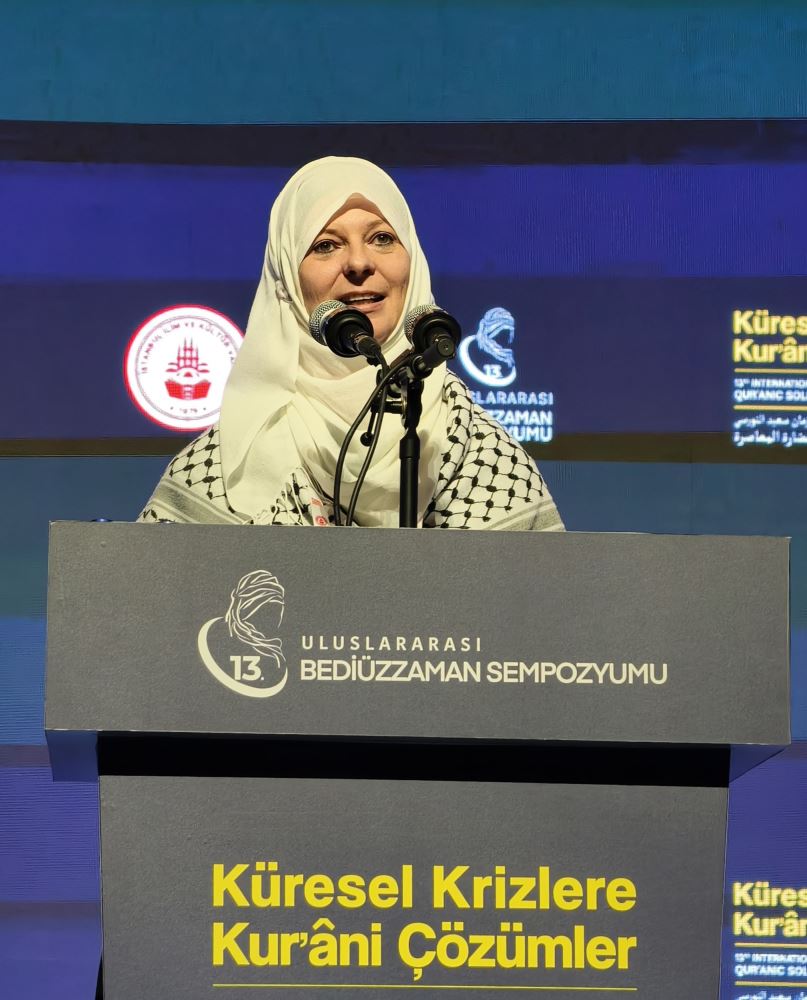
We listened to your speech yesterday. Could you summarise it for our newspaper’s readers?
Bismillahirrahmanirrahim. Yesterday, I spoke about how, for around 80 years, humanity has been part of a global media project and an advertising-driven system of control. We are fed particular messages, while our data is extracted in ways that make us, knowingly or unknowingly, complicit in the system. Some describe it as a Dajjalic system; Allah knows best. But it is certainly not an angelic system.
I worked in mainstream media for 20 years and witnessed ego, misinformation and disinformation. Insha’Allah, the way out is to know our Deen, but also to understand the parameters of the system and recognise that we are inside a glass cage. We need to break out of it. Rather than seeking to please those who control us, we should strive to be independent through Islam and by following the practices and teachings of the Prophet, sallallahu alayhi wa sallam.
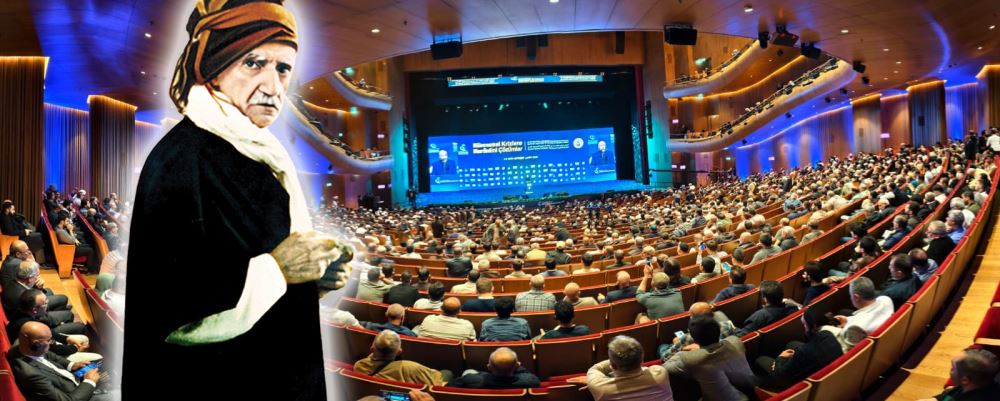
Bediuzzaman Said Nursi argued that the deepest crisis of the modern age is not political or economic, but a crisis of faith. Do you agree? What are your thoughts on this?
That is a very big question. The loss of respect for the human being as a soul and a person worthy of dignity—as someone who is here to please God and belongs to a community—began in the West around 300 or 400 years ago. I’m British, and I have seen people stop going to church. I have seen people being taught to hate God, distrust Jesus and turn away from church. Today, some churches in the UK are being turned into bars. It is deeply disturbing to walk into a beautiful historic church and find that happening.
During a journey, I met a man from Manchester who had tattoos and was drinking alcohol. By the grace of Allah, I spoke to him gently. By the end of the journey, he had accepted a Qur’an; he was crying and thanking me as he got off. From the outside, someone might say, “I don’t want to talk about Islam.” But we have a duty to bring the truth to people.
In his reflections on justice, Bediuzzaman distinguishes between absolute justice (adalat al-mahda) and relative justice (adalat al-izafiyya). Are you familiar with these terms?
I’m not familiar with those terms.
According to absolute justice, one person cannot be sacrificed for the sake of the whole world; in this respect, one person and a million people are no different. Relative justice, by contrast, may allow one person to be sacrificed for the supposed benefit of society. How should today’s policymakers apply this distinction when faced with systematic human rights violations or refugee crises?
That is too big a question for me, and it is outside my area of expertise. I do not believe in international law, because I don’t believe it has ever truly existed. It was never really established to bring fairness. I believe in the law of Allah Ta’ala and in divine justice.
Do you think Bediuzzaman Said Nursi’s Risale-i Nur works are sufficiently understood in the Islamic world?
I don’t yet understand his works, even though I live in Istanbul, so we clearly have work to do to explain Bediuzzaman. Insha’Allah, being here at this conference in Istanbul is a great opportunity for me to learn.
What would you like to say about the current situation in Palestine?
There will not be peace until there is unity among Muslim nations, and that may mean taking practical action against the occupier. The people of Palestine will remain patient, and Allah knows when peace will come. Insha’Allah, may our leaders be brave and courageous, and may we too show courage in the cause of the Ummah. Ameen.
Yeni Asya English