Prof. Dr. Mohammed al-Ghazali said, “Bediuzzaman Said Nursi redirected people to the Qur’an and Sunnah. The Risale-i Nur Collection is one of the ways of expressing and understanding the Qur’an and Sunnah.”
INTERVIEW: İBRAHİM ERSOYLU
[email protected]
PHOTOGRAPHS: MUHAMMED OKUR – YENİ ASYA
INTRODUCTION
Following the Bediuzzaman Symposium held in Istanbul in early October, we met with Prof. Dr. Mohammed Husseini Musa Mohammed al-Ghazali, a descendant of the Ahl al-Bayt (the family of the Prophet Muhammad).
Please read on...
First of all, could you tell us about yourself?
In the name of Allah, the Most Gracious, the Most Merciful. All praise is due to Allah. May peace and blessings be upon our Master, the Messenger of Allah, his family, his Companions, and those who follow his path.
My name is Mohammed Husseini Musa Mohammed al-Ghazali. I am a descendant of the Ahl al-Bayt; my father’s lineage goes back to Hazrat Husayn, and my mother’s to Hazrat Hasan. I serve as a professor at Al-Azhar University. I pray that Allah blesses Al-Azhar, its Sheikh, its scholars and its graduates.
The legacy of Nursi is valuable
When and how did you first become acquainted with Bediuzzaman Said Nursi and the Risale-i Nur?
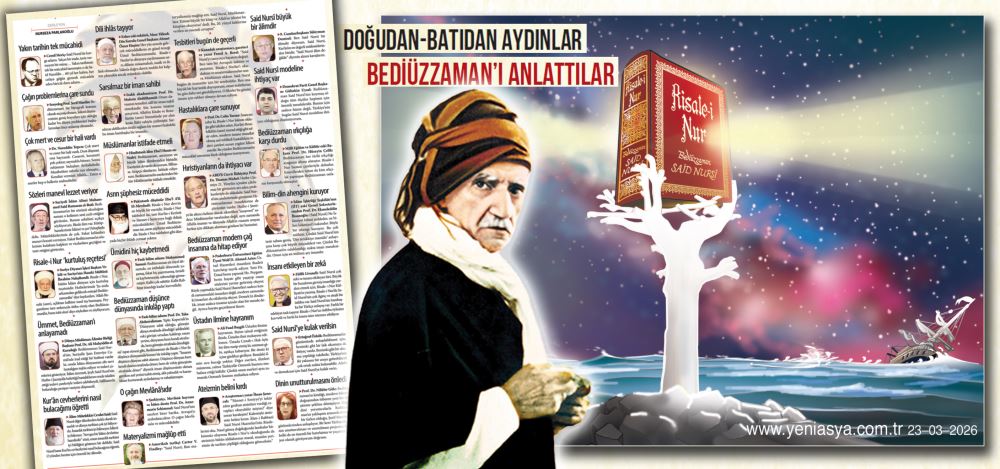
I became acquainted with the works of Ustad Bediuzzaman Said Nursi around forty years ago, or perhaps even earlier, when the Risale-i Nur Collection was being printed and distributed in Cairo. Many people, particularly Abdülkerim and Mr Ahmed, among the Nur students in Egypt, rendered great services in publishing, distributing and preserving Nursi’s legacy.
I have documented approximately forty studies on the Risale-i Nur at Al-Azhar University, the Institute of Asian Studies, Benha University and other institutions. Nursi’s legacy is valuable; it is founded not on partisanship towards any particular group, but on devotion to Allah.
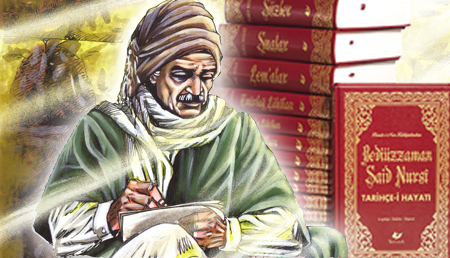
Ustad İhsan Kasım es-Sâlihî translated the works into Arabic with great skill and used an excellent style. The Nur madrasas in Egypt also contributed to the service of these works, which were published in more affordable editions and with improved print quality. I have several copies of the Risale-i Nur Collection in my library.
Have you had the opportunity to read and study the Risale-i Nur? How do you think it differs from other works?
I have read all the works of the Risale-i Nur, which comprise approximately forty books. Every scholar has a distinctive style, way of thinking and perspective. I cannot say that one scholar is absolutely superior to another. Each stands out through what they have written; all are valuable. All praise is due to Allah, the Lord of all worlds.
He wanted Medresetü’z-Zehra to become a nucleus
Bediuzzaman had a university project called Medresetü’z-Zehra, where religious sciences and modern sciences would be taught together. What would you like to say about this project?
The Medresetü’z-Zehra project, which Bediuzzaman envisaged establishing in eastern Türkiye, aimed to bring religious sciences and modern sciences together under the same educational roof.
Nursi lived through the final period of the Ottoman Empire and the process that began after 1924. He was deeply saddened by the closure of mosques, the abolition of the call to prayer, the decline of religious education and the promotion of curricula that were not based on Islam.
He wanted Medresetü’z-Zehra to become a nucleus that would grow over time. In his view, his students should stay away from politics and direct their efforts towards serving religion and conveying its message. Preaching and conveying the faith bring people together, whereas politics can sometimes lead to divisions.
I visited these regions twenty years ago or more, and later returned. I observed changes in social behaviour and appearance, as well as an increase in Islamic activities. I hope this revival will continue throughout the Muslim world. Nursi advised his students to stay away from politics and place service to religion above it.
In his works, Bediuzzaman emphasised the need for the realisation of Islamic unity (ittihad al-Islam) in the Muslim world. He stated that the greatest obligatory duty of Muslims in this age is Islamic unity. In your opinion, when might this unity be achieved?
I liken the Islamic world to the fingers of one hand. When the fingers come together, they form a strong hand; when they remain apart, each is weak. If Muslim countries unite like the fingers of a single hand, they will become a power that no one can easily defeat.
Let the Qur’an and Sunnah be their refuge
What message would you like to convey to the readers of Yeni Asya and the viewers of Yeni Asya TV?
I advise the readers and viewers of Yeni Asya newspaper and television to read the Risale-i Nur Collection and benefit from it. Let the Qur’an and Sunnah be their guiding principles and their refuge.
Bediuzzaman Said Nursi drew upon the Qur’an and Sunnah and redirected people towards them. The Risale-i Nur Collection is one of the ways of expressing and understanding the Qur’an and Sunnah.
Thank you on behalf of Yeni Asya.
I thank you, too, and wish you every success in your work.
Yeni Asya English