As its name suggests, the Risale-i Nur is a light. We must carry this light, disseminate it through contemporary and up-to-date methods, and bring it to the world.
INTERVIEW: İBRAHİM ERSOYLU
PHOTOGRAPHS: ERHAN AKKAYA – YENİ ASYA
INTRODUCTION
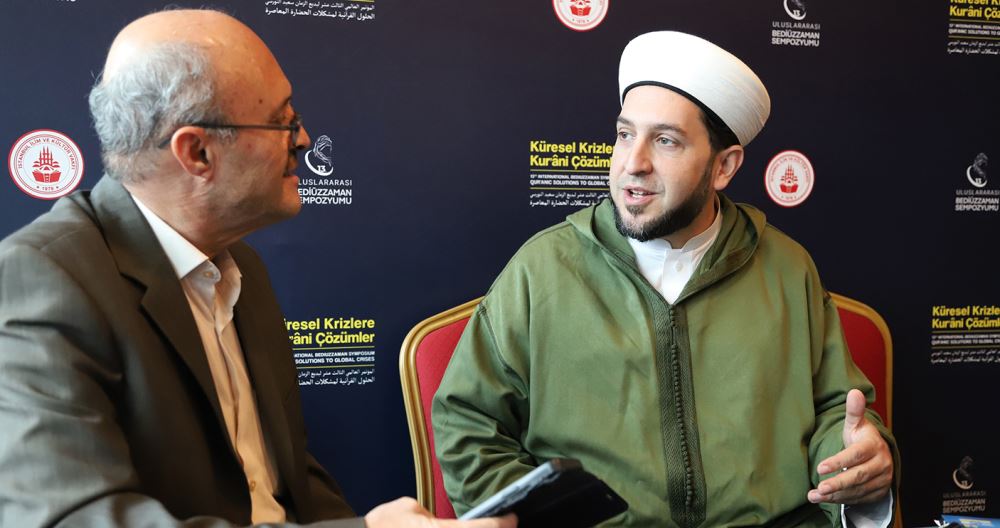
During the Bediuzzaman Symposium held in Istanbul in early October, we met with Jordanian scholar Dr Cihad al-Kelawti, who holds a doctorate in Fiqh (Islamic jurisprudence) and Usul al-Fiqh (principles of Islamic jurisprudence). In our interview, we asked al-Kelawti about Bediuzzaman and the Risale-i Nur, and he gave some interesting answers. Here is our interview.
First, could you tell us about yourself?
I am Dr Cihad al-Kelawti, a Jordanian citizen. I hold a doctorate in Fiqh and Usul al-Fiqh. My thesis was entitled “Self-Sufficiency in Islamic Law and Its Applications: A Theoretical and Practical Study”. In Jordan, we have a Sharia educational institution called the Maahid Institute. It conducts studies in the field of Islamic sciences and has branches in different countries. We also have an association in Türkiye called the “Legacy of Prophethood Association”, which is involved in education, culture, social activities and charitable services.
Have you visited Türkiye before?
I am of Jordanian-Turkish background. I can speak Turkish to a certain extent. I first came to Türkiye about twenty years ago. Now I spend most of my time between Türkiye and Jordan.
When and how did you first become acquainted with Bediuzzaman Said Nursi and the Risale-i Nur? Are Bediuzzaman and the Risale-i Nur known in Jordan?
Yes, the Risale-i Nur is known and read in Jordan. Many people in scholarly circles are interested in these works. There are publishing houses in Jordan that deal with the Risale-i Nur, and some academics also follow these works. I had heard of Bediuzzaman Said Nursi since my childhood. We have read many passages from the Risale-i Nur with students and friends. We have also read works dealing with the miracles of the Qur’an.
Today, the world is experiencing crises in the fields of faith, morality and the economy. Field research indicates that movements rejecting religion, such as atheism and deism, are spreading among young people both around the world and in Islamic countries. The Risale-i Nur, which places great emphasis on faith, shows the way to protect people, particularly young people, from the influence of these movements. It has helped many people preserve their faith. What are your thoughts on this?
Today, we face many challenges. We have moved beyond modernity and postmodernity into what is called the post-postmodern era. Unfortunately, atheism is spreading. However, as our scholars say, dawn breaks after the darkest hour. There are various reasons for the spread of atheism, some of which are psychological or economic. Some people may turn towards these ideas for reasons other than genuine conviction.
The issues addressed in Bediuzzaman Said Nursi’s Risale-i Nur are important in making the light of faith fully visible. Nursi addresses atheism by teaching people to look at the universe correctly and to strengthen their faith through contemplation of the Qur’an, the Written Book, and the Book of the Universe. In this respect, the method of the Risale-i Nur is one of the important ways of confronting atheism and the troubling ideas spreading throughout the world.
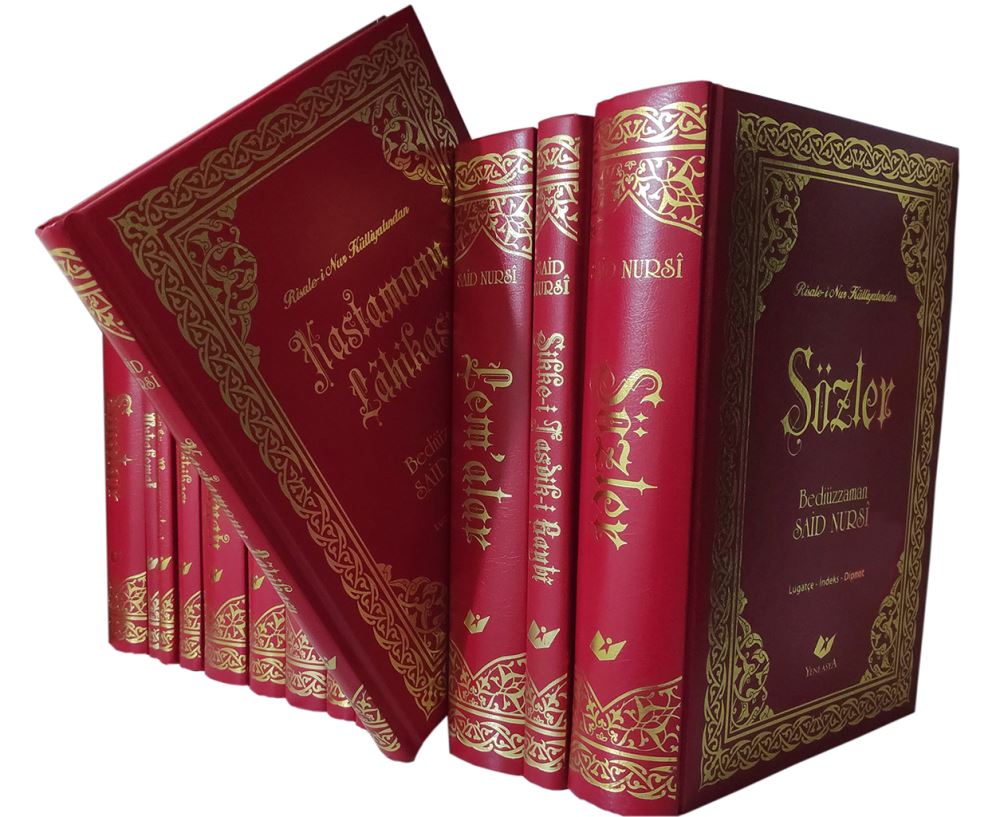
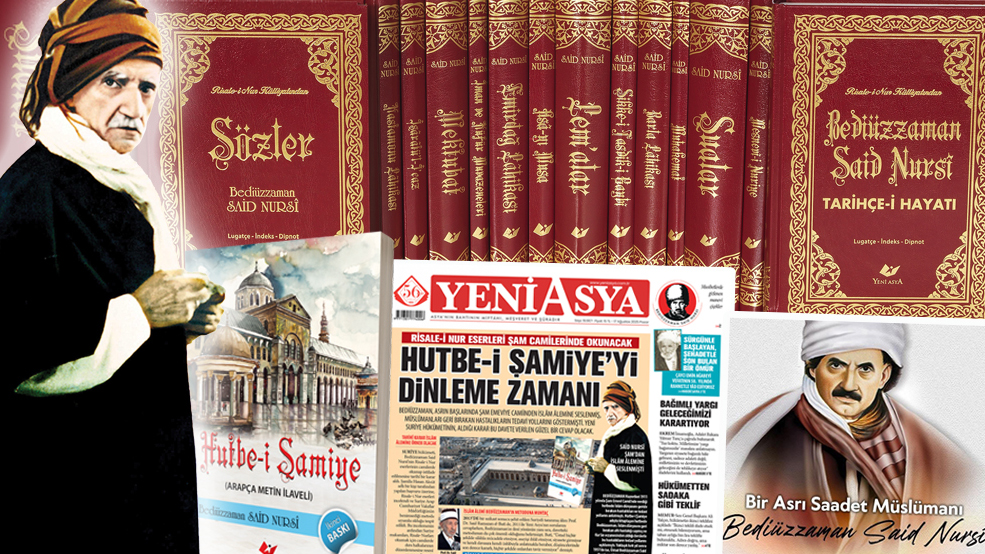
In his work Hutbe-i Şamiye (The Damascus Sermon), Said Nursi identifies ignorance, poverty and disunity as among the greatest enemies of the Islamic world. Do these problems still persist today?
Yes, these problems continue to exist both in the Islamic world and throughout the world. In fact, poverty is increasing. We are moving from one crisis to another. Competition and conflict over water and mineral resources are also among the major problems today. Ignorance, meanwhile, takes different forms; one of them is compounded ignorance. Today, people obtain information from short “Reels” videos. Each video presents a different idea, leading to confusion in the fields of thought and culture. Information is presented in fragmented form and as ready-made patterns, which can result in compounded ignorance and superficial understanding.
Said Nursi emphasises that Muslims and devout Christians should cooperate in the struggle against atheism and moral decline. Can such cooperation be established today?
This is one of the important principles of the mission of the Prophet Muhammad (peace be upon him). Through him, Allah brought together people who had been divided. The Qur’an states: “Establish the religion and do not be divided therein.” Therefore, we must uphold the religion and avoid division. The things that unite us are more numerous than those that separate us. Our approach should be to maintain communication rather than create divisions, to build rather than destroy, and to seek common ground.
Islamic unity is important. Nevertheless, in today's world, where issues are politicised, this may present certain difficulties. However, God willing, sincere people will one day be able to come together and discuss matters without being influenced by global politics.
Said Nursi considers it necessary for Islamic countries to establish a common union in the form of “Islamic Allied Republics”, as in the United States, in which each country would remain independent in its domestic affairs while being united in its foreign affairs. What do you think about this?
In my speech at the symposium, I spoke about the importance of self-sufficiency at both the individual and the Ummah levels. Complementarity between regions is also necessary, because each region has its own particular resources and strengths. However, today the Ummah has fallen into a state described by the word “ghutha”, meaning “debris carried along by a flood”. There is no common decision-making mechanism that brings the Ummah together.
Here, we are not necessarily referring to today's forms of government or to a particular political model. However, the Prophet Muhammad (peace be upon him) foretold that this religion would reach every home, and Allah will complete His light. We are speaking of a time when we will be given glad tidings of the Caliphate in Jerusalem. At that time, the Ummah will have a common decision, and we will emerge from our present state of weakness and fragmentation.
Would you like to convey a final message to Yeni Asya readers?
The Risale-i Nur, as its name suggests, is a light. We must carry this light, disseminate it through contemporary and up-to-date methods, and bring it to the world. We pray that Allah bless Türkiye, its administration and its people. Türkiye is a leading country today. God willing, the worldwide dissemination of the Risale-i Nur will also expand in parallel with Türkiye’s global outreach. May Allah accept our efforts.
I would also like to tell readers this: We must read and understand the Risale-i Nur and put the truths it contains into practice in our lives. Our efforts should not remain at the level of reading alone; we must put the Risale-i Nur into practice through contemporary methods.
Thank you for sharing your views with us. May Allah be pleased with you.
I also thank you. I wish you and the newspaper’s readers success in serving faith and the Qur’an.
Yeni Asya English